


LOGIN
JOIN
Not just the skin —
deep sagging too
SMAS Incision Lift
Depending on the degree and extent of sagging,
we plan the right method: a minimal-incision mini lift or an SMAS facelift.
What is an SMAS incision lift?
Depending on the degree and extent of sagging,
we choose between a minimal-incision mini lift and an SMAS facelift.
What is a minimal-incision mini lift?
Only where needed, more simply
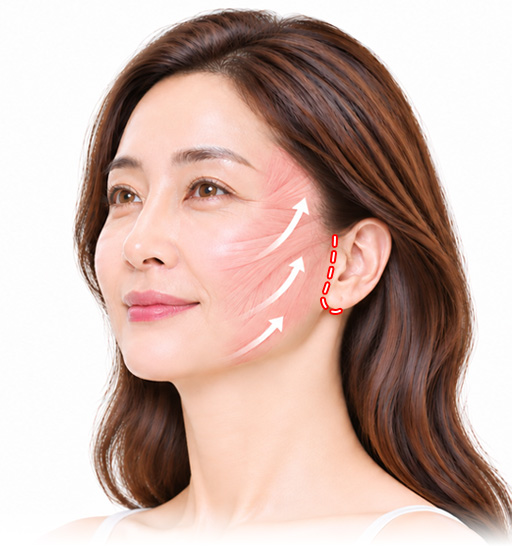
A mini lift pulls up sagging skin and soft tissue through a relatively small incision around the ear.
Compared with a facelift, the dissection and incision areas are relatively limited,
so it can be considered for early cheek sagging, a breaking-down jawline or sagging deep cheeks.
To minimize hollow cheeks, deep cheek (buccal) fat repositioning or fat grafting is performed together.
Main target areas
- Sagging cheeks
- Deep cheeks
- Jawline
What is an SMAS facelift?
Not just the skin — deep sagging too
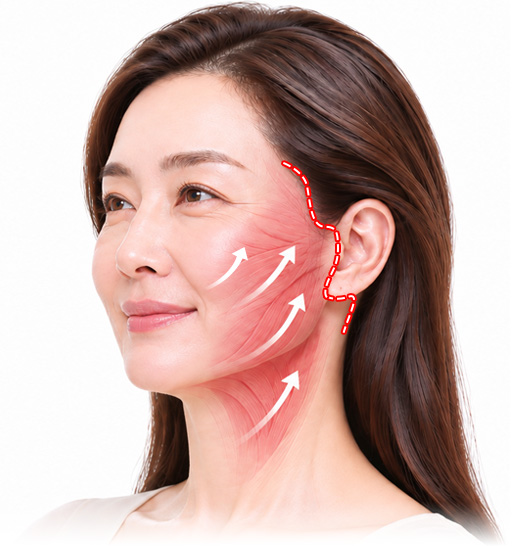
A facelift improves facial sagging by dissecting and repositioning the skin and soft tissue, including the SMAS layer, that have drooped with age.
When sagging is extensive or the cheeks and jawline have broken down overall,
it is performed to improve sagging across the mid and lower face, from the nasolabial area and mouth corners to the jawline.
Main target areas
- Sagging cheeks
- Nasolabial area
- Marionette lines
- Deep cheeks
- Sagging mouth corners
- Jawline
- Neck
Surgery Information
Results may vary depending on individual symptoms, condition and surgical method.
| Category | Minimal-incision mini lift | SMAS facelift |
|---|---|---|
| Surgery time | About 1–2 hrs | About 3–5 hrs |
| Anesthesia | Sedation or general anesthesia | General anesthesia |
| Stitch removal | After about 7–10 days | After about 7–14 days |
| Recovery | Major swelling·bruising about 1–2 weeksVaries by individual | Major swelling·bruising about 2–3 weeksVaries by individual |
| Hospitalization | Same-day discharge possible | Decided by surgical extent and patient condition |
SMAS incision lift procedure
Minimal-incision mini lift
Focusing on the needed area through a small incision
- STEP01
Design
We assess the degree and direction of facial sagging and design the lifting vector.
- STEP02
Minimal incision around the ear
The incision is centered around the ear so that the scar is inconspicuous.
- STEP03
Minimal dissection & lifting
After dissecting only as far as needed, sagging tissue including the SMAS layer is pulled in the right direction and secured.
- STEP04
Skin trimming & suturing
Excess skin is trimmed naturally and the incision is finely sutured.
SMAS facelift
Fully releasing sagging tissue and returning it to place
- STEP01
Precise design
We check the degree of sagging, excess skin and the condition of the SMAS to plan the surgical extent.
- STEP02
Hairline & periauricular incision
The incision line is designed in front of and behind the ear, extending to the hairline if needed.
- STEP03
Sufficient dissection
The necessary area is fully dissected so the sagging tissue can move naturally.
- STEP04
SMAS lifting & fixation
The stretched, sagging SMAS layer is pulled in the right direction, repositioned and firmly secured.
- STEP05
Skin trimming & suturing
After lifting, excess skin is removed and the incision is finely sutured so that no excessive tension falls on the skin.
SMAS incision lift POINT
MIHO’s SMAS incision lift — what we take into account
Minimal-incision mini lift POINT
- 01
Focusing on what’s needed
We approach only the necessary area, centered on where sagging has begun.
- 02
Quick return to daily life
Limiting extensive dissection reduces post-operative swelling and the burden of recovery.
- 03
Lifting that addresses the SMAS layer
We don’t simply pull the skin — we also address the deeper tissue that causes sagging.
- 04
Less extensive incision
It is performed with a relatively limited incision and dissection compared with a facelift.
SMAS facelift POINT
- 01
Wide dissection
We reach well into areas of severe sagging so the tissue can move naturally.
- 02
SMAS layer lifting
Rather than just pulling the skin, the deep soft tissue layer is corrected as well.
- 03
Overall facial balance
The lifting direction is decided by considering the line that connects the cheeks, mouth corners and jawline.
- 04
Fine suturing of incision lines
After securing the tissue so that excessive tension does not concentrate on the skin, the incision lines are finely sutured.
SMAS incision lift FAQ
Minimal-incision mini lift FAQ
QWho is a mini lift suitable for?
It can be considered when early to moderate sagging appears locally, such as in the cheeks, mouth corners or jawline.
QHow is a mini lift different from a facelift?
A mini lift has a relatively smaller dissection area than a facelift, reducing the burden of recovery.
It can be considered when nasolabial or mouth-corner sagging is mild but cheek and jawline sagging is a concern.
QDoes a mini lift leave noticeable scars?
The incision mainly follows the area around the ear; its location and extent depend on the individual’s degree of sagging and the surgical method.
SMAS facelift FAQ
QWhen is a facelift needed?
It can be considered when nasolabial folds, marionette lines, and sagging of the cheeks and jawline need improvement.
Depending on the extent of sagging, it can also be combined with a neck lift to improve everything from the jawline to the neck line.
QWhat effect does a facelift have?
A facelift does not stop aging; it improves current sagging to turn back the clock to a more youthful-looking state.
Natural aging then continues from the post-operative state.
QHow long do facelift results last?
Because it does not stop aging, natural aging continues afterward; how long results last varies by skin condition, rate of aging and surgical extent.
MIHO Anti-Aging Surgery
Pre- & Post-op Precautions
Before surgery
BEFORE NOTICE
Please be sure to tell us in advance about any adverse drug reactions, known medical conditions
or history of general anesthesia. (high blood pressure, diabetes, lung disease, heart disease, hepatitis, etc.)
Stop alcohol, smoking and all forms of medication from 1 week before surgery.
If you take any medication, please let us know in advance. (aspirin, diet pills, red ginseng, sleeping pills, etc.)
Depending on the anesthesia, do not eat or drink anything, including water,
for 6 hours before surgery (8 hours for general anesthesia).
On the day of surgery, wear comfortable clothes and bring a hat,
scarf or sunglasses to protect the treated area.
If you need to take blood pressure or diabetes medication, please tell your coordinator or doctor
After surgery
AFTER NOTICE
Keeping the treated area 20–30 degrees higher than the heart helps swelling subside.
Please avoid spicy or greasy food.
Apply cold compresses for about 3–5 days after surgery,
then warm compresses until the swelling goes down.
Be careful not to cry, rub your eyes or squeeze them shut.
Smoking and drinking slow recovery. Please avoid both for at least 4 weeks.
MIHO Safe Surgery System
We don't just pursue aesthetic beauty;
we consider each patient's facial features and function.

Real-time monitoring
A central monitoring system
observes the patient's vital signs
in real time during surgeryOperating room CCTV
CCTV in the operating room
increases transparency of the surgery
and enables emergency responseSurgeon accountability
Specialists in each field
provide dedicated 1:1 care
from consultation to post-op recoveryResident anesthesiologist
A systematic anesthesia system
and an on-site anesthesiologist
for safe, hygienic surgeryAccurate diagnosis & safety
Safe surgical planning and
accurate assessment of issues and
improvements for higher satisfactionThorough aftercare
Aftercare kit provided and
partnership with Seoul St. Mary's Hospital
for rapid response to emergencies
Before & After |
||||||||||||||
|
||||||||||||||
|
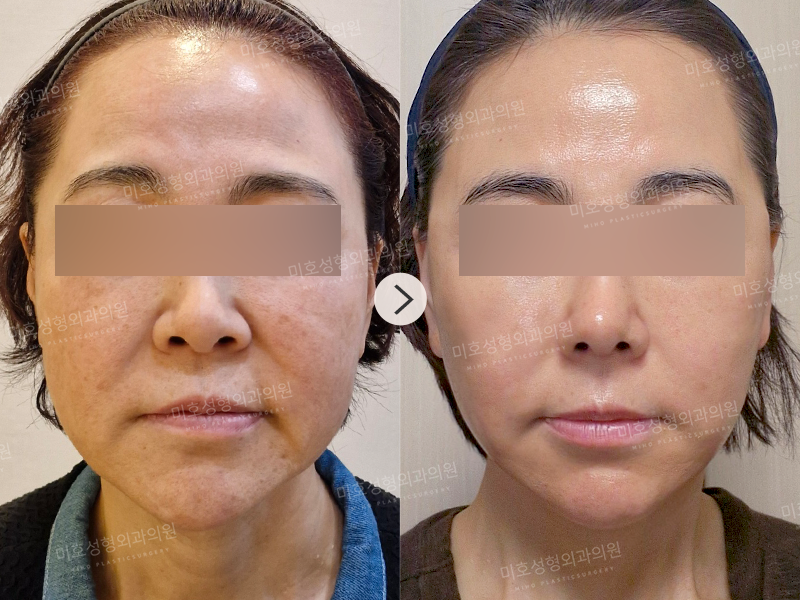
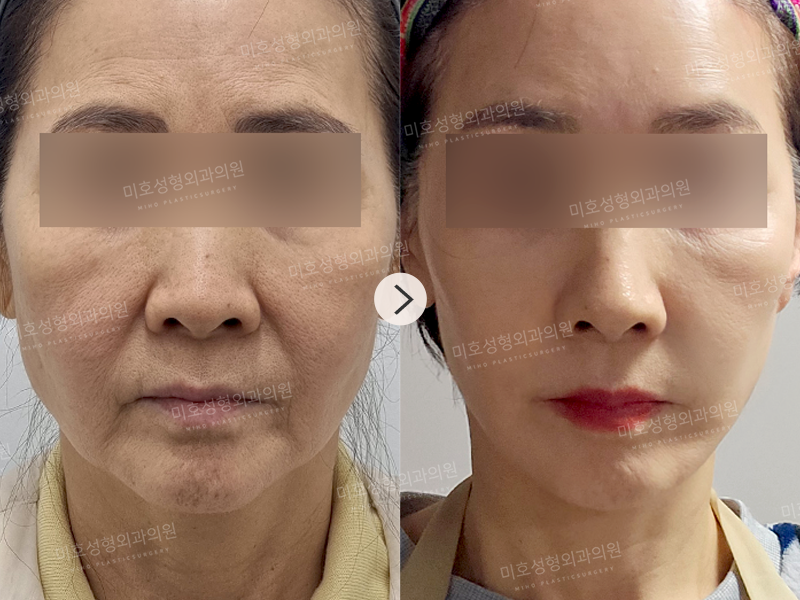
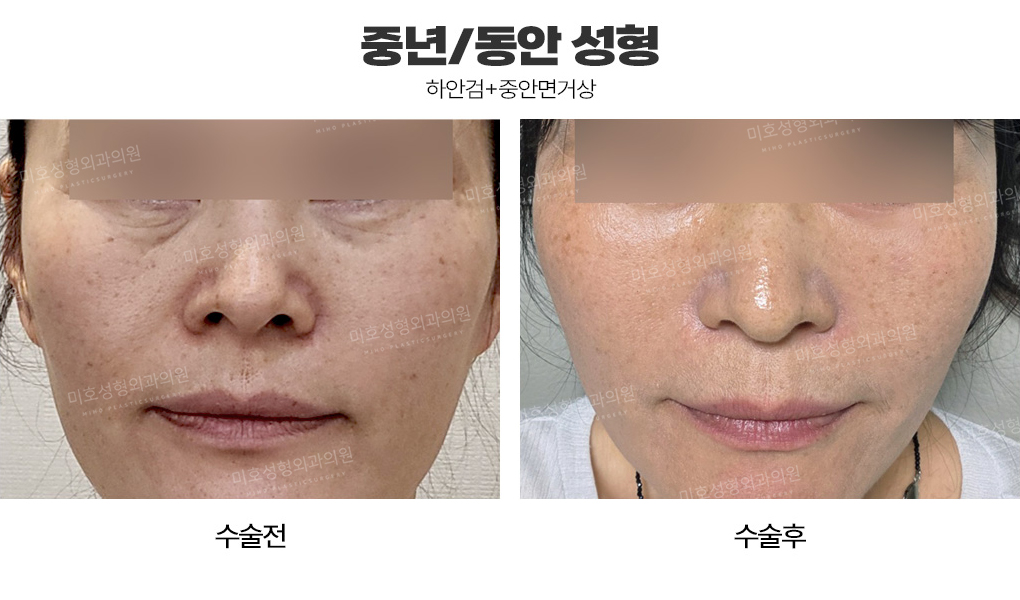
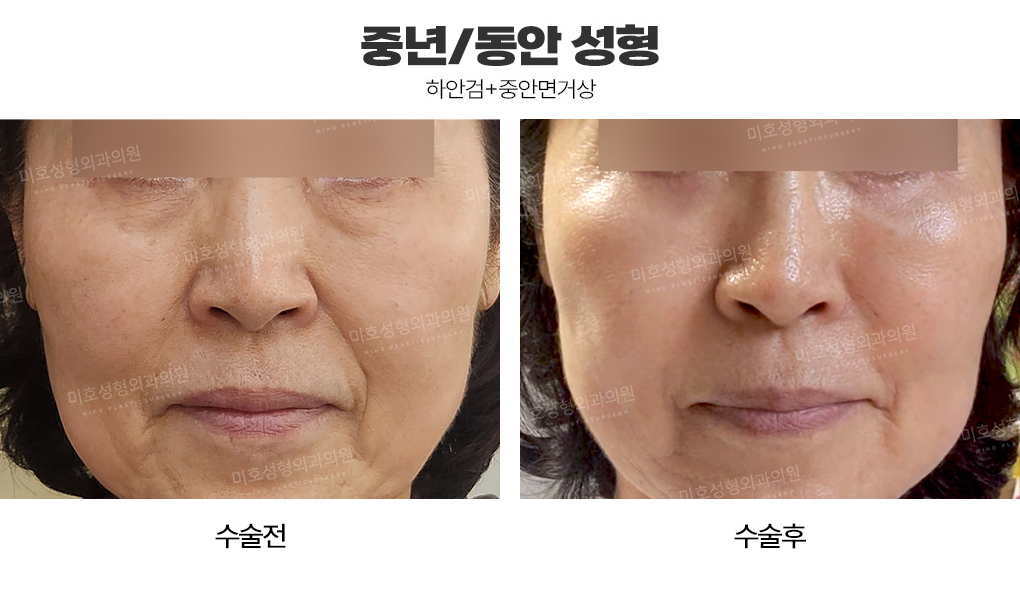
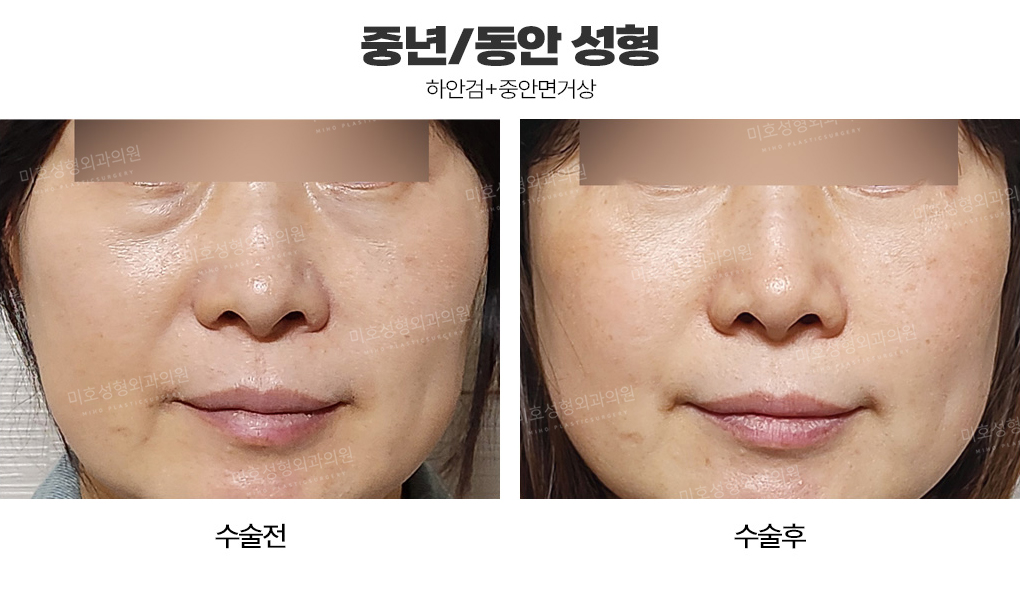
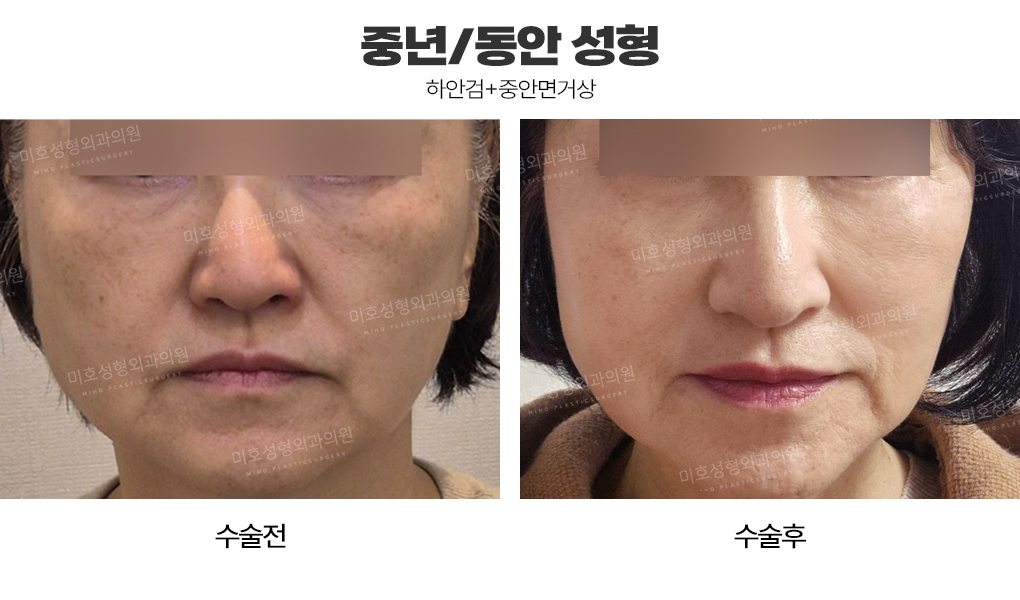
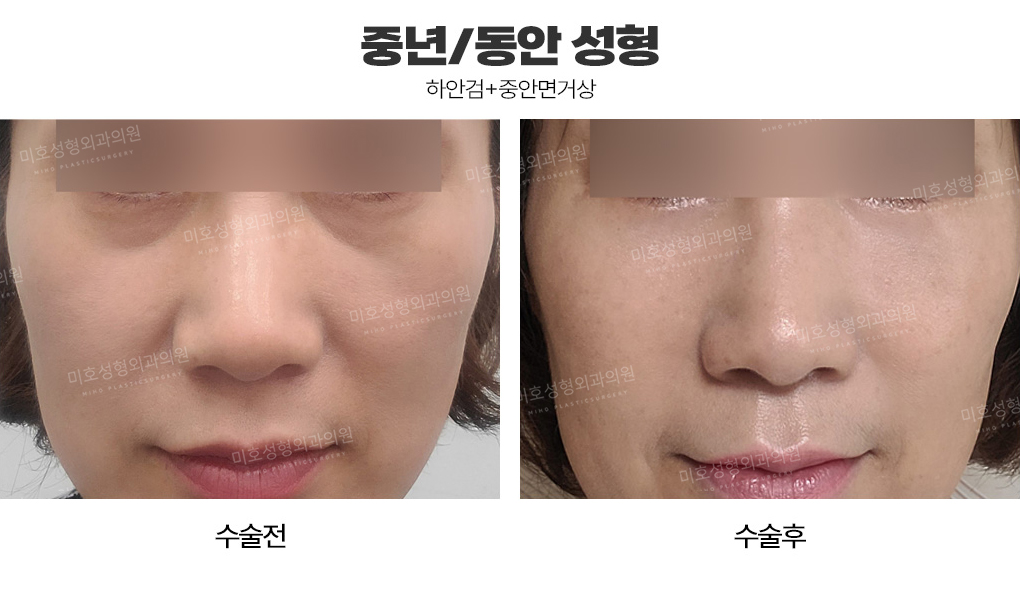
Complications that can commonly occur after surgery, such as bleeding, infection and inflammation, vary in degree from person to person, so caution is required.
Quick Consultation
Choose a date you can visit
and we'll arrange your consultation quickly.
LOCATION

7–9F, HM Tower, 492 Gangnam-daero, Gangnam-gu, Seoul (Sinnonhyeon Station 3-min walk from Exit 3)
CUSTOMER CENTER
Main Number
02.595.5503
Hours
Mon – Fri
10:00 AM – 7:00 PM
Saturday
10:00 AM – 5:00 PM
Closed on Sundays and public holidays.
Quick Consultation


